Most buyers look at square footage, layout, and finishes. All very important. But we've seen stunning renovated condos that feel heavy and dim by 2pm, and modest units that glow through a grey November because of how they sit on the building.
Sun exposure affects your heating bills, how your plants survive, whether your bedroom lets you sleep past 6am, and genuinely how you feel on a rainy Tuesday in January. In Vancouver we have about 166 sunny days a year. You want every one of them working for you, not against you.
This guide walks you through the four main orientations, what actually blocks the sun (it's not always what you think), which rooms need what kind of light, and a tour checklist you can actually use. And in Vancouver, where we have long grey stretches, beautiful mountain views and a few intense weeks of summer heat, exposure isn’t just a preference, it’s a lifestyle decision.

South-Facing. Light Through the Grey
Most natural light throughout the day
Warmest exposure, especially in winter
Often considered the most desirable orientation
South is the most sought-after exposure in Vancouver, and the reason is counterintuitive: it actually performs best in winter, not summer. Because the sun sits low on the horizon from October through March, it reaches deep into a south-facing room - sometimes well past the midpoint of the space. On a cold January afternoon you can feel real warmth through the glass.
In summer, the sun rides high and comes in at a steep angle, so it doesn't penetrate as far. You get great light without baking.
Watch out for: Some furniture fading over time, occasional summer overheating in top-floor units without an overhang, and a price premium, typically 3-8% more than comparable north-facing units.
West-Facing. Sunsets & Summer Heat
Strong afternoon and evening light
Ideal for sunsets over the water or city
Can get very hot in the summer
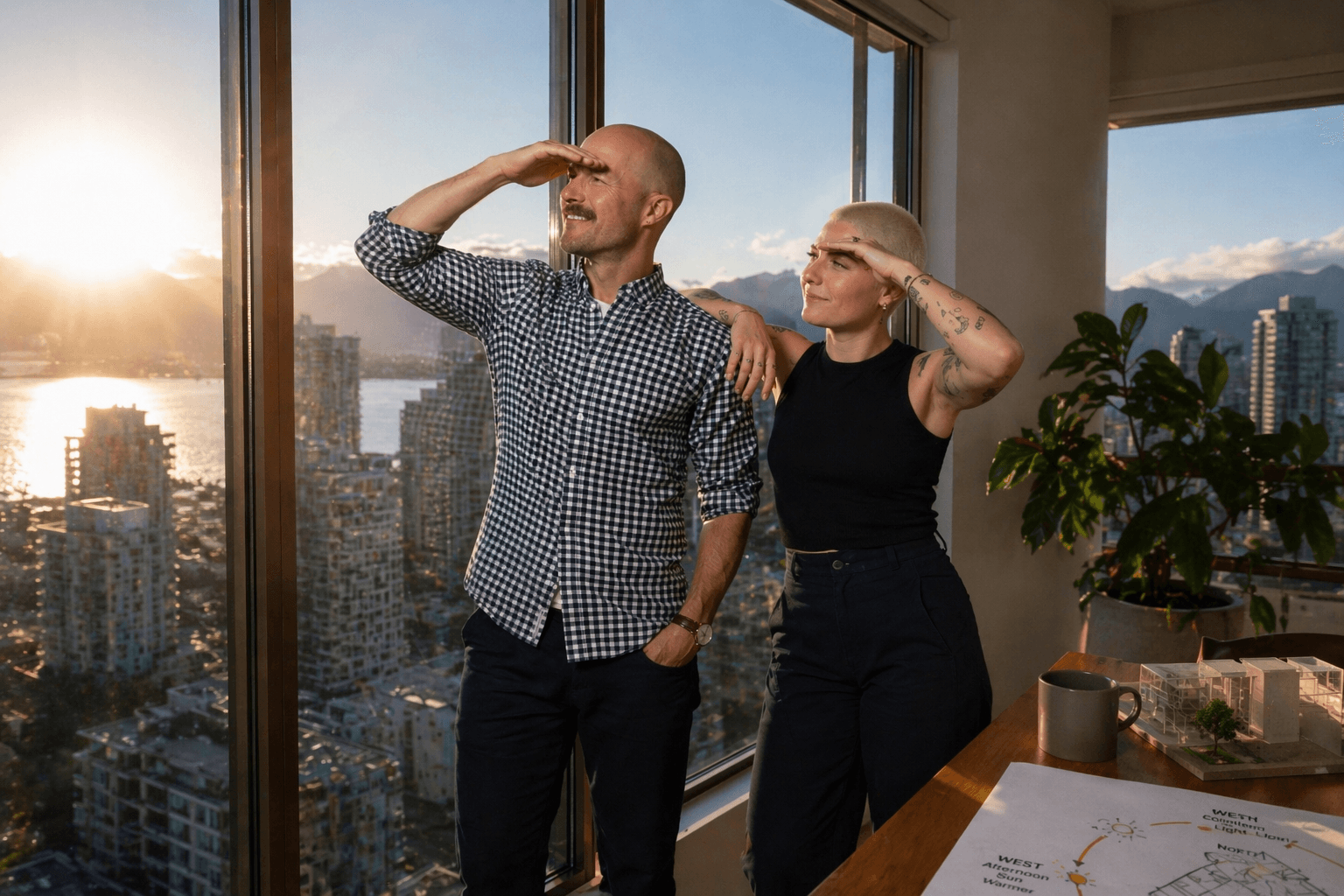
West is polarising, and I love having the conversation with buyers. The honest truth: mornings are dim. If you work from home and need brightness at 9am, this will wear on you. But if you leave for work in the morning and come home after 5pm? This might be your unit.
West-facing balconies in Vancouver are genuinely spectacular on clear evenings - English Bay, the North Shore peaks, the sky going orange-pink. That view is real value for the right buyer. Afternoon light from around 2pm onward fills the space with warm, golden tones that make even modest rooms feel rich.
The tradeoff is heat. During those July and August heat waves, west-facing units can heat up quickly, especially in buildings without AC. It’s one of the biggest things we flag during showings. Budget for good window coverings if you go this route.
Watch out for: Dark mornings, intense summer heat between 2-6pm, monitor glare if your desk faces west.
East-Facing. Morning Light, Cooler Living
Best for early risers, coffee-on-the-balcony types, morning workout people and anyone who front-loads their productive hours. The morning light can be beautiful, soft, warm and direct. By early afternoon the direct sun is gone.
That afternoon cooldown is actually a real advantage. East-facing units stay comfortable in summer without air conditioning. They're also typically better priced than south or west, which buys you a lot of other things. In Vancouver’s climate, this can feel like a really comfortable middle ground, bright when you start your day, but not overheating by evening.
Watch out for: Dim evenings, less warmth through grey winter afternoons, the unit has already "peaked" by the time most people get home from work
North-Facing — Soft Light & Moody Views
No direct sunlight
Cooler year-round
Even, glare-free light
We don't sugarcoat north-facing, and buyers appreciate that. You don't get direct sunlight in Vancouver. In grey winters that matters. The space will feel consistently cooler, you'll run lights more often and there's no moment in the day where the room transforms the way it does in a south or west unit.
That said north-facing has real advantages that get overlooked. The light is even and diffused all day - no glare, no hot spots, no fading. Artists and photographers often prefer it. They stay the coolest in summer and are often preferred by people working from home. And if the view is spectacular, a north-facing unit looking at the North Shore mountains or Burrard Inlet, the trade-off is absolutely worth it. You're also typically paying less per square foot.
Watch out for: No direct sun ever, heavier feel through winter, higher heating costs over time.
It's Not Just Direction - What Else Blocks Your Sun
Direction is the starting point, not the whole story. A south-facing unit can get almost no sun if the building next door blocks it. Always check these on any showing:
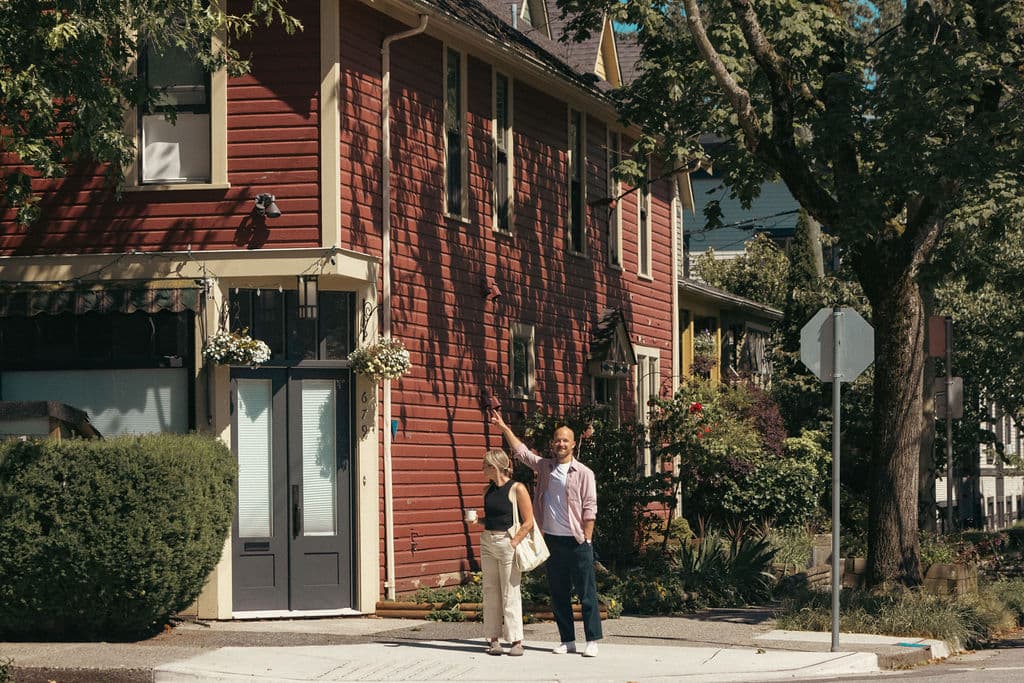
Adjacent buildings - Look at what's directly in front of the windows and how tall it is relative to your floor. A south-facing unit on floor 3 in a dense neighbourhood might be completely shaded by a mid-rise across the lane. Also worth checking: are there any rezoning applications nearby? That two-storey commercial building today might be 15 storeys in four years.
Mature trees - A large tree to the west can actually shade you from harsh summer afternoon heat. But a mature tree directly south of your main windows is blocking your best winter light.
Your floor level - Higher floors amplify the benefits of any good exposure. Lower floors often lose direct light even with a great orientation. On a south-facing building, floors 1-3 in a dense block might get substantially less sun than floors 8-10.
Balcony overhang - Look up at the balcony slab above you during your showing. Deep overhangs can cut winter sun even from a south-facing unit because the winter sun angle is low. This is especially relevant for lower floors on buildings with generous balcony depths.
Hills and topography - Vancouver's geography means this matters more than most cities. A unit that faces south but sits at the base of a slope in East Van or the hillside neighbourhoods might not see afternoon sun at all. When in doubt, visit at 2pm.

Which Room Wants Which Light?
One of the most overlooked questions is whether the layout matches the exposure. Direction is about the building - but not every room in the unit faces the same way, especially on corners or larger floor plates.
Living room → South or West. This is where you spend your waking hours. You want warmth and natural light here most. A bright living room makes the whole unit feel more open and livable. South for all-day brightness; west if evenings are your main living time.
Primary bedroom → East or North. The bedroom should let you sleep. South and west bedrooms are cosy in winter but can wake you at 5am on a June morning with blazing light and heat. East bedrooms get morning sun - great if you're an early riser, tougher if you're not. North bedrooms stay cool and dark naturally, which is genuinely good for sleep quality.
Home office → East or North. Glare on a monitor is the enemy of productivity. North-facing offices have the most consistent, glare-free light all day. East works well for morning-heavy work schedules. Avoid sitting at a desk facing west if you work afternoons - you'll be squinting from 2pm onward.
Kitchen → East or South. Morning light in a kitchen is a genuine joy. East kitchens get beautiful, soft light during breakfast and morning prep. South kitchens stay bright and functional all day. West kitchens can get very hot in summer while you're trying to cook dinner - a detail that's easy to miss in a February showing.
Corner units are often the best of both worlds. They give you two exposures, which means you can potentially have a bright south or west living room while keeping bedrooms on a north or east face. Always ask which rooms face which direction - not just the building's overall orientation on the listing.

The Bottom Line
Sun exposure isn't a bonus feature - it's the architecture of how you'll feel in your home every single day. The direction of a unit can mean the difference between a space that gives you energy in February and one that drains it.
South is the premium choice for a reason. West rewards evening lifestyles. East is underrated value for morning people. North makes sense when the view is right and the price reflects the trade-off.
There’s no universal “best” direction, but in Vancouver understanding exposure is key. Know what you're buying - and visit at more than one time of day before you commit.
Have questions about a specific unit you're looking at? We're happy to walk you through it. Reach out to us any time